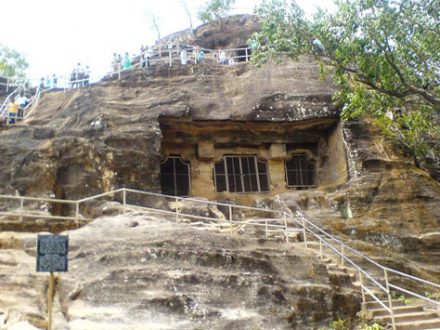
Pandava Caves
Pandava Caves are five ancient dwellings excavated in the sandstone rock in a low hill. Pachmarhi derives its very name from these caves — "Panch" (five) + "Marhi" (caves) — which, as the legend goes, once provided sanctuary to the five Pandava brothers of the Mahabharata during their period of exile.
These are now protected monuments under the Archaeological Survey of India. The single-chamber cave designs, some featuring pillared structures, date to approximately 4–5 century A.D. — the Gupta Period — confirmed through inscriptions discovered in Cave No. 3.
Historical Significance
Archaeological evidence reveals a fascinating multi-layered history. Buddhist monks (Bhikshus) meditated in these caves even before the Pandava era. Hindu discovery of the site occurred roughly 300 years after the Buddhist occupation.
- Cave No. 2 features chaitya arc-motifs on its facade — evidence of Buddhist influence
- Cave No. 3 displays miniature carved figures of Jambhal (the deity of wealth)
- Gupta Period dating confirmed via inscriptions in Cave No. 3
- In 1999, the Archaeological Survey of India discovered brick-built Stupa remains above the caves — a major historical find
The caves are set amidst beautiful gardens with well-manicured lawns, making the site as pleasant as it is historically significant. The panoramic view from the caves is also quite remarkable.
Visitor Tips
- Combine with Pandav Gufa Garden for a beautiful half-day outing
- Carry water — the walk to the caves involves some climbing
- The Archaeological Survey information boards provide detailed historical context
- Photography is permitted throughout the site
- Best visited in the morning for good light and fewer crowds